
Your Baby Is Already Telling You Everything. Here's How to Hear It.
Reading your baby's cues is one of the most important skills in early parenting and one of the least taught. Most parents spend months wondering whether their baby is bonding with them, reading the silence as uncertainty, when their baby has actually been sending clear signals since the first weeks of life.
This post breaks down what developmental neuroscience now knows about how babies communicate, what their signals actually mean, and why learning to read them changes everything about how you experience early connection.
Your Baby Is Already in a Conversation With You
The way we typically talk about infant bonding positions the parent as the active party and the baby as the recipient. You do the bonding. Your baby receives it. Attachment forms as a result of what you deliver.
That model is incomplete, and the gap in it is costing parents confidence.
Research published last year tracking 74 mother-infant pairs during face-to-face singing interactions found something that challenges the standard picture entirely (Reisner et al., Musicae Scientiae). The connection wasn't one-directional. It was a bidirectional loop, with the baby's behavior actively shaping the caregiver's responses and vice versa, in real time. Mothers were unconsciously adjusting their vocal patterns before their infant's gaze even shifted. The babies were anticipating, tracking, and adjusting in parallel.
This isn't a metaphor. By two months, infants are already synchronizing their visual attention to the rhythmic structure of caregivers' voices (Lense et al., 2022). By three months, the reciprocity loop is fully measurable, with each partner continuously influencing the other — what is described as "temporal coordination of micro-level social behavior," and what is linked to long-term developmental outcomes in self-regulation, language, and the capacity for empathy (Feldman, 2007).
PET scans also confirm that caregiver-infant interactions activate the amygdala and orbitofrontal cortex, regions directly linked to emotional bonding. Bartels and Zeki (2004) found that mothers watching their own infants showed increased activity in brain regions governing emotion regulation and reward. Two nervous systems. Continuous, bidirectional crosstalk. From the earliest weeks.
Your baby hasn't been waiting to participate. They started months ago.
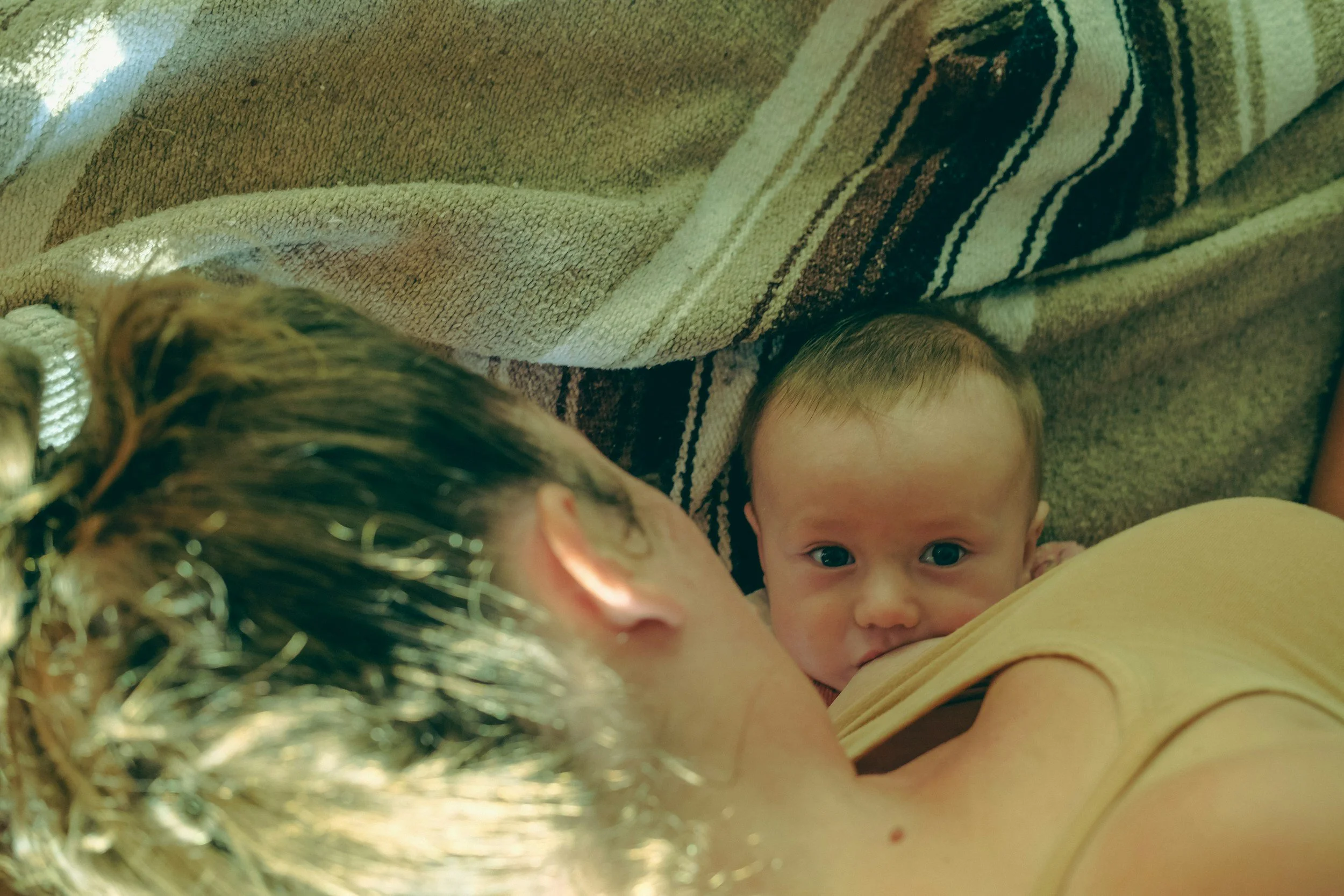
What Baby Cues Actually Look Like
The cues that carry the most developmental weight are not the dramatic ones. Smiles and cries get attention. The subtle signals, the ones that actually tell you the most about your baby's state and the state of your connection are easy to miss because nobody teaches parents what to look for.
Engagement signals (your baby is with you and reaching back):
Gaze held a fraction of a second longer than usual. A slight lean toward your voice. A pause before turning away. Soft, open hands. Increased eye contact after you respond to something they did. These are your baby saying yes, tracking whether you follow their lead. When you do, even imperfectly, you reinforce the signal loop.
Self-regulation signals (your baby's nervous system is managing load):
Looking away, turning the head, going still, hand-to-face contact, arching. These are not rejection signals. This is your baby's nervous system doing exactly what it should — temporarily reducing input so it can process what it's already taken in. When you recognize this as self-regulation instead of withdrawal, two things happen: you stop personalizing it, and you start working with it instead of against it.
Joint attention signals (your baby is inviting you into their world):
Shifting gaze between an object and your face. Pausing in play to look at you. Reaching toward something and glancing back.
Research published in 2023 examined 37 caregiver-infant dyads using EEG during naturalistic tabletop play. Infants at 10 to 12 months were not routinely proactive in creating joint attention episodes, but they were exquisitely sensitive to whether caregivers responded contingently to their initiations. When caregivers joined their attentional focus, infants showed increased alpha suppression, a neural marker of anticipatory processing. Your baby isn't leading. But they are absolutely tracking whether you follow them. And every contingent response you give, even an imperfect one, is received as data.
Why Reading Baby Cues Is Harder Than It Should Be
Here's the truth: reading infant signals is genuinely hard, and not because of any failure on your part.
The signals are fast. Some of the most developmentally significant cues appear and resolve in under a second. Research on maternal sensitivity consistently shows that even highly attuned parents misread signals regularly, especially under sleep deprivation, postpartum hormonal shifts, or chronic stress. None of that is pathology. It's context.
There's also the issue of nervous system availability. Data shows that the vocal variability associated with stronger language outcomes were those infants with more playsong-oriented interactions, like “Wheels on the Bus",” showed larger vocabularies at 20 months — requires the caregiver's nervous system to be reasonably regulated. Not perfect. Just available. When depletion flattens that availability, the loop dims. Not because the love is less, but because the signal gets quieter.
This matters as a diagnostic frame, not a guilt trigger. If connection feels harder than it should, the question is rarely whether you're doing enough. It's what's depleting your capacity to be present in the loop. Those are very different problems with very different solutions.
What the Research Actually Shows About Long-Term Impact
This isn't just about the felt experience of connection in the moment. The downstream stakes are significant.
Research followed 157 children across the first year of life and into preschool age. Maternal contingent responsiveness assessed at 4 months shaped the infant brain to support the emergence of prosocial behaviors across the entire first year (Paz et al. (2024, Developmental Science). Similar research found this effect moderated by infant temperament, with infants higher in social contingency sensitivity benefiting most (Frenkel et al.,2024). High reciprocity in early infancy has been linked to higher social competence and prosociality in middle childhood, better peer relationships, and reduced aggression — effects measurable from infancy through middle childhood (Feldman et al., 2013; Davidov et al., 2022; Deater-Deckard & Petrill, 2004).
The signal loop isn't just building attachment. It's building brain architecture, in real time, with long-term consequences for how your child navigates relationships, regulates emotions, and understands others.
Signs Your Baby Is Bonding With You
If you're wondering whether bonding is happening, here's what to look for in language grounded in what the research actually shows.
Your baby is bonding with you when they calm more readily to your voice than to unfamiliar voices. When they use your face as a reference point after something surprising happens, checking your expression to calibrate their own response. When they show preferential gaze, following your face more consistently than strangers'. When they adjust their behavior in response to yours — pausing when you pause, vocalizing when you vocalize — a pattern researchers (Feldman, 2007) documented as early as 3 months. When they protest at separation and settle at your return.
Bonding is not one moment or one feeling. It's a pattern built across thousands of small reciprocal exchanges, most of them completely unremarkable in the moment. What predicts secure attachment is not perfection in any individual interaction but contingent responsiveness over time: your baby signals, you respond, the loop stays open. That's it.
How to Read Baby Cues: A Practical Starting Point
The fastest way to improve your signal-reading is to shift from monitoring your own behavior to watching your baby's responses. Instead of asking "am I doing this right," ask "what did they do after I did that?"
Watch what happens after you respond to something. Did the engagement deepen? Did they turn toward you? Did the gaze linger? Those are confirmation signals. The loop is working.
When they look away, wait. Give them a beat to process and come back. If they return and reengage, the connection is intact. The looking away was regulation, not disengagement.
Match their timing rather than your own. Babies process information more slowly than adults expect. Pausing and waiting, rather than filling every silence, gives them room to respond. That space is where a lot of reciprocity happens.
Notice your own nervous system first. If you're depleted or anxious, your signal capacity narrows before you're consciously aware of it. Taking your own regulation seriously isn't self-indulgence. It's part of the loop.
The Bottom Line on Baby Bonding and Cue-Reading
You don't need to do more. You need a clearer map of what's already happening.
Once you understand that bonding is bidirectional, that your baby has been in a conversation with you since birth, that their signals are real and readable with the right framework — the question stops being "is this working?" and becomes "what is my baby telling me right now?"
That shift changes everything.
Want to understand what's happening in your specific relationship with your baby? That's exactly what The Parenting Collaborative is for. We map the relational dynamics, identify what's getting in the way of attunement, and give you a framework specific to your baby's nervous system and yours.
By Lauren Greeno
Child & Adolescent Development Specialist & Parenting Coach | Founder, The Parenting Collaborative
Lauren specializes in helping parents understand invisible dynamics shaping their children’s development and redesigning family systems before patterns calcify into adult identity. With expertise in child development, family systems theory, and trauma-informed parenting, she works with families navigating sibling dynamics, only child considerations, neurodivergence, emotional regulation, and breaking generational patterns.
Work with Lauren: Book a discovery call | Learn more| Instagram | TikTok
References:
Bartels, A., & Zeki, S. (2004). The neural correlates of maternal and romantic love. NeuroImage, 21(3), 1155–1166.
Davidov, M., Paz, Y., Roth-Hanania, R., Uzefovsky, F., Orlitsky, T., Mankuta, D., & Shamay-Tsoory, S. (2022). Caring babies: Concern for others in distress during infancy. Developmental Science, 24(2), e13016.
Deater-Deckard, K., & Petrill, S. A. (2004). Parent-child dyadic mutuality and child behavior problems: An investigation of gene-environment processes. Journal of Child Psychology and Psychiatry, 45(6), 1171–1179.
Feldman, R. (2007). Parent-infant synchrony: Biological foundations and developmental outcomes. Current Directions in Psychological Science, 16(6), 340–345.
Feldman, R., Bamberger, E., & Kanat-Maymon, Y. (2013). Parent-specific reciprocity from infancy to adolescence shapes children's social competence and dialogical skills. Attachment & Human Development, 15(4), 407–423.
Frenkel, T. I., Paz, Y., & Davidov, M. (2024). Maternal contingent responsiveness at 4 months shapes infant brain to support prosocial development. Developmental Science [advance online publication].
Lense, M. D., Camarata, S., & Camarata, M. (2022). Infant synchrony to maternal singing: Implications for music and communication development. Frontiers in Psychology, 13.
Meltzoff, A. N., & Moore, M. K. (1997). Explaining facial imitation: A theoretical model. Early Development & Parenting, 6(3–4), 179–192.
Paz, Y., Roth-Hanania, R., Zahn-Waxler, C., Orlitsky, T., Mankuta, D., Shamay-Tsoory, S., & Davidov, M. (2024). Infant sensitivity to social contingency moderates the predictive link between early maternal reciprocity and infants' emerging social behavior. Developmental Science, 27(4), e13499.
Reisner, M., Mehr, S. A., & Spelke, E. S. (2025). The reciprocal relationship between maternal infant-directed singing and infant gaze. Musicae Scientiae [advance online publication].
Swain, J. E., Lorberbaum, J. P., Kose, S., & Strathearn, L. (2007). Brain basis of early parent–infant interactions: Psychology, physiology, and in vivo functional neuroimaging studies. Journal of Child Psychology and Psychiatry, 48(3–4), 262–287.
Wass, S. V., Noreika, V., Marriott Haresign, I., Phillips, E., Davis, M. H., Samuel, S., ... & Leong, V. (2023). Proactive or reactive? Neural oscillatory insight into the leader-follower dynamics of early infant-caregiver interaction. Proceedings of the National Academy of Sciences, 120(15), e2122481120.
