
Stop Repeating the Rule. Your Kid Needs a Comparison, Not a Repeat.
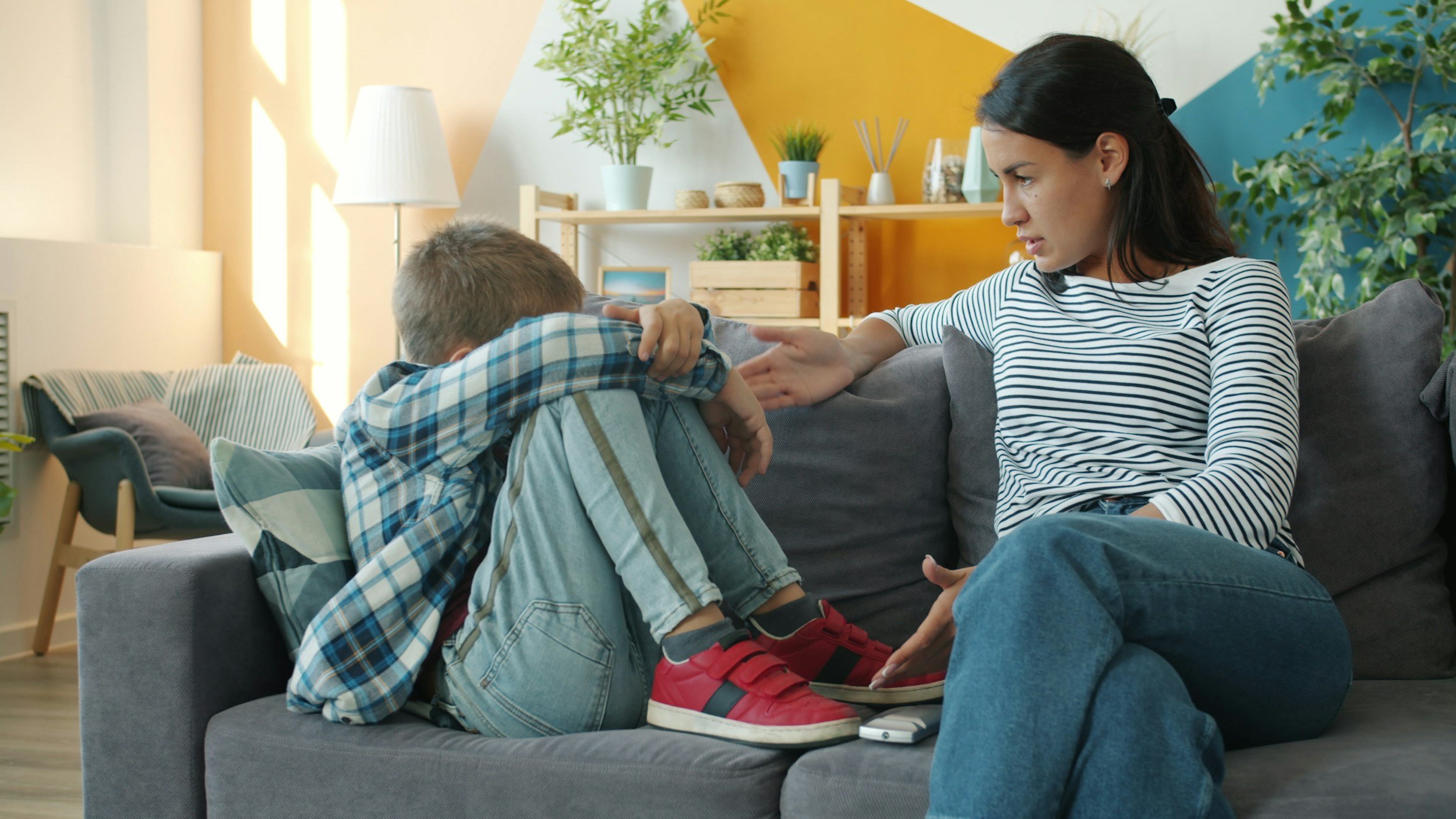
My daughter lost ice cream yesterday. Not because I'm strict about sugar. Because she yelled at us instead of doing the redo, the reset we ask for when she needs to communicate differently. Total meltdown. "That's not fair." I explained the rule again, calmly, the way you're supposed to. It didn't land.
Two weeks before that, same kid, lost the chance to go swimming. Same reason. She yelled instead of doing the redo. Same meltdown. Same "that's not fair."
I handled those two moments like they were two separate problems. To her, they were. And that's the part that changed everything once I understood why.
The Rule Isn't The Thing That's Missing
Most of us were taught that natural and logical consequences work because they're connected to the behavior. Lose a privilege because of how you acted, not something unrelated, and the child learns cause and effect. That part of the research holds up. Consequences tied directly to a behavior are more effective than arbitrary ones, and that's been a cornerstone of evidence-based parenting programs for years.
But there's a gap in that model that doesn't get talked about enough: a single consequence, explained once, doesn't teach a pattern. It teaches an event. My daughter didn't walk away from the swimming incident with "yelling costs me things I want." She walked away with "swimming got taken away that one time." Two completely different lessons, and only one of them generalizes to the next time she's frustrated.
What The Research Actually Shows
A study published this year in Child Development (Zheng & Gentner, 2026) tested this directly with 4 to 6 year olds. Kids were shown a pattern that could be explained by one broad cause or by several separate, specific ones, and asked to figure out why. When they could compare two examples side by side, they were dramatically more likely to land on the real underlying pattern. When comparison was hard, even kids who were actively trying to explain what happened fell back on the surface-level detail in front of them instead.
The younger kids in the study, 4 year olds, didn't spontaneously make that comparison on their own. But when an adult pointed it out directly, "let's put these two together, what's the same here," they performed just as well as the older kids. The capacity was there. What was missing was someone showing them where to look.
This tracks with a broader body of research on how children reason by analogy. Kids as young as four are already able to compare two events and pull out a shared relationship, but studies on attentional focus have found that young children tend to under-attend to the first example in a pair, which is exactly the piece that makes a comparison meaningful in the first place. Left alone, they gravitate toward whichever detail is right in front of them. Ice cream. Right now. Not fair.
What I'm Doing Differently
I'm not explaining the rule again next time. I'm saying: "Remember when you lost swimming because you yelled instead of doing the redo? Today you lost ice cream because you yelled instead of doing the redo. What's the same about those two?"
I'm not softening the consequence. I'm giving her the second data point her brain needs to stop fixating on the ice cream and start noticing that yelling is the actual thing.
That shift, from "this one unfair thing happened to me" to "oh, this is about how I communicate," is the whole goal. But it only works if the two moments actually line up, and if she's regulated enough to hear it at all. Pick the wrong pair, or try it mid-meltdown, and it backfires; she just feels ganged up on instead of understood.
That's the part that isn't a formula. That's the part that looks different with every kid.
If this is a pattern you're seeing in your own house, rules repeated, consequences delivered, nothing actually sticking, I'd love to help you figure out what's really going on with your specific kid.
By Lauren Greeno
Child & Adolescent Development Specialist & Parenting Coach | Founder, The Parenting Collaborative
Lauren specializes in helping parents understand invisible dynamics shaping their children’s development and redesigning family systems before patterns calcify into adult identity. With expertise in child development, family systems theory, and trauma-informed parenting, she works with families navigating sibling dynamics, only child considerations, neurodivergence, emotional regulation, and breaking generational patterns.
Work with Lauren: Book a discovery call | Learn more| Instagram | TikTok
Sources:
Zheng, Y. S., & Gentner, D. (2026). Comparison helps children form broad explanations. Child Development, 97(4), 1217–1232.
Research on children's attentional focus in analogical reasoning tasks, Frontiers in Psychology.
Oklahoma State University Extension, Parenting with Natural and Logical Consequences.
The Melissa Institute, Positive Parenting: Using Natural and Logical Consequences.
